

Description
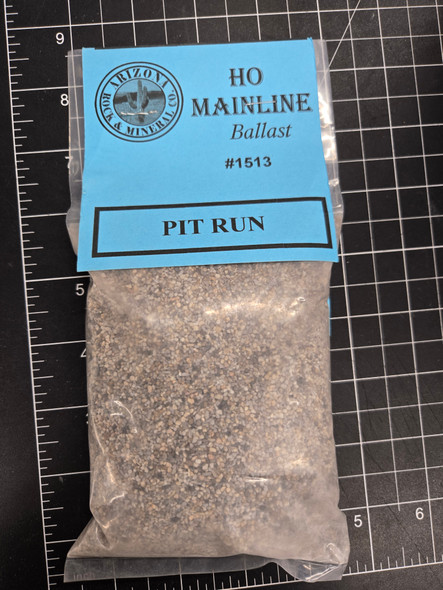
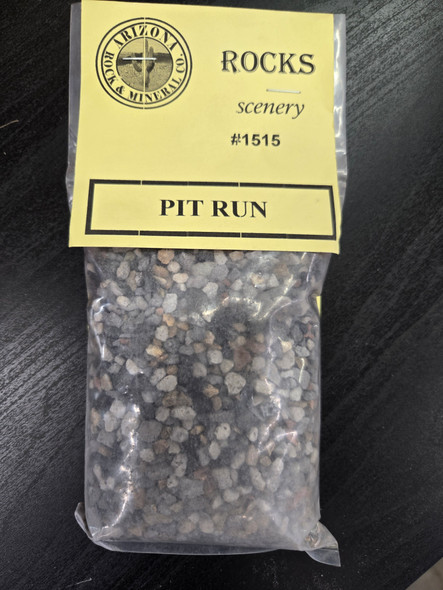
1514 Bag Pit Run G Scale Ballast is crafted for large-scale layouts. Its bold size and texture match G scale perfectly. Because it is real crushed rock, the ballast holds its natural color and texture for years.
Modelers use G scale ballast to create authentic track beds, yards, and scenery transitions. The larger stone size ensures proportion with massive G scale locomotives. Its subtle color blend reflects actual railroad conditions.
Transitioning between ballast and scenery is crucial at this scale. Pit Run G Scale Ballast provides smooth, natural edges. Because outdoor layouts are common in G scale, durability matters. This product withstands weathering better than foam or painted alternatives.
Key Features of G Scale Model Railroad Ballast
1514 Bag Pit Run G Scale Ballast includes features that modelers demand. Each stone is natural, not synthetic, guaranteeing long-lasting realism.
The product is screened specifically for G scale track beds. Stones settle between ties with correct proportion. Their varied shapes mimic real crushed rock.
Color variation adds authenticity. Some stones are lighter, others darker. This prevents flat, monotone appearance. Natural railroads show these subtle differences. Pit Run captures them effectively.
Additionally, the ballast bonds securely with diluted glue. Once set, it forms a durable surface. Because G scale layouts often endure handling and weather, this strength is essential.
Why Choose G Scale Track Ballast
Track ballast is essential for railroad accuracy. On real railroads, it stabilizes track, manages drainage, and supports heavy loads.
In G scale modeling, ballast serves visual and structural purposes. G scale track ballast provides realistic proportion and improves scenery. Without ballast, layouts appear incomplete.
1514 Bag Pit Run G Scale Ballast captures realism with natural stone. Its irregular particles reflect light correctly. Unlike synthetic products, it does not fade or look artificial.
Because G scale emphasizes bold scenery, ballast makes an immediate impact. It frames tracks, defines edges, and blends with surrounding ground cover. For authentic layouts, it is indispensable.
G Scale Ballast Rock for Mainlines
Mainlines must look neat and well-maintained. G scale ballast rock delivers that clean appearance. Spread evenly along ties and shoulders for realistic effect.
Apply diluted glue to secure it in place. This forms a stable, durable bed. Once bonded, the track looks professional and authentic.
To enhance realism, apply weathering. Airbrush light gray or brown across ballast surface. Use powders for dust and oil stains. These touches create believable mainline traffic patterns. Because trains dominate mainlines, detail here matters most.
G Scale Ballast Stone for Yards
Rail yards require a different look. They often have mixed textures and weathered surfaces. G scale ballast stone replicates these conditions effectively.
Apply loosely across tracks to show irregular wear. Blend with powders for dirt and oil effects. Scatter weeds or debris for realism.
Yards often reflect years of heavy use. Darken ballast with pigments to simulate oil and soot. This provides contrast with clean mainlines. By combining variation and weathering, G scale yards appear convincing.
G Scale Railroad Ballast for Branch Lines
Branch lines often lack refined ballast. They feature thin coverage and encroaching soil. G scale railroad ballast helps capture this weathered look.
Apply thin layers along tracks. Blend with dirt powders for aging effects. Add grass tufts and weeds between ties. This creates neglected, secondary track appearances.
For still-active branch lines, use slightly heavier layers. Blend with lighter ballast to differentiate from mainlines. Because railroads economized, ballast often looked inconsistent. Modeling these differences improves realism.
G Scale Train Track Ballast for Sidings
Sidings usually have messy, uneven ballast. G scale train track ballast replicates this accurately.
Apply unevenly to simulate wear. Add weeds and debris for neglected sidings. Near industries, ballast often mixes with dirt. Blend darker tones for oil and spills.
Industrial sidings especially benefit from texture. They often display rough surfaces from heavy equipment. Pit Run ballast helps replicate this convincingly. Because trains frequently use sidings, scenery detail here improves immersion.
G Scale Model Train Ballast for Scenery
Ballast extends beyond tracks. G scale model train ballast works well for industrial pads, access roads, and parking areas.
Spread under structures for gravel foundations. Scatter around construction sites for authentic work areas. Blend with powders to simulate dust and soil.
Because it is natural rock, it reflects light correctly. Foam or painted substitutes look unrealistic at this large scale. With Pit Run ballast, G scale layouts maintain authenticity.
G Scale Gray Ballast for Versatility
Gray tones dominate many railroad regions. Pit Run includes natural gray hues. G scale gray ballast adapts to multiple prototypes easily.
Light stones represent sun-bleached areas. Darker stones reflect damp or oily conditions. This variation creates realism naturally.
Gray ballast also provides a strong base for weathering. It accepts paints, washes, and powders well. This makes it adaptable for different settings. Because of its versatility, gray ballast remains a reliable choice.
Creating G Scale Realistic Ballast
Realism depends on variation and layering. G scale realistic ballast effects come from blending textures and weathering.
Spread ballast thickly on mainlines, thinly on sidings. Add weeds and stains for neglected areas. Layer with powders for dust and grime.
Study real railroads for guidance. Observe ballast around crossings, switches, and yards. Reproducing those details elevates layouts. With Pit Run, realism comes naturally.
G Scale Fine Ballast for Detail
Some areas benefit from smaller particles. Pit Run includes sand-like grains. These act as G scale fine ballast.
Use them in drainage ditches or service areas. Apply along walkways or tool sheds. Blend with larger stones for smooth transitions.
Fine ballast avoids sharp scenery edges. It softens transitions between dirt, grass, and track. This creates balance across scenery. In large-scale modeling, these details make layouts more convincing.
Details
Store Location: |
P# 256 / Aisle 14C #floor |
Scale: |
G Scale |