How to Use NMRA Standards Gauges
How to Use NMRA Standards Gauges
Smooth-running trains don’t happen by accident. Precise wheel spacing, correct flange depth, and accurate track gauge all contribute to reliable operation. That’s why the NMRA Standards Gauge is one of the most important tools in model railroading.
In this guide, we’ll cover what the NMRA gauge does, how to use it, and why every model railroader should keep one handy.
What Is an NMRA Standards Gauge?
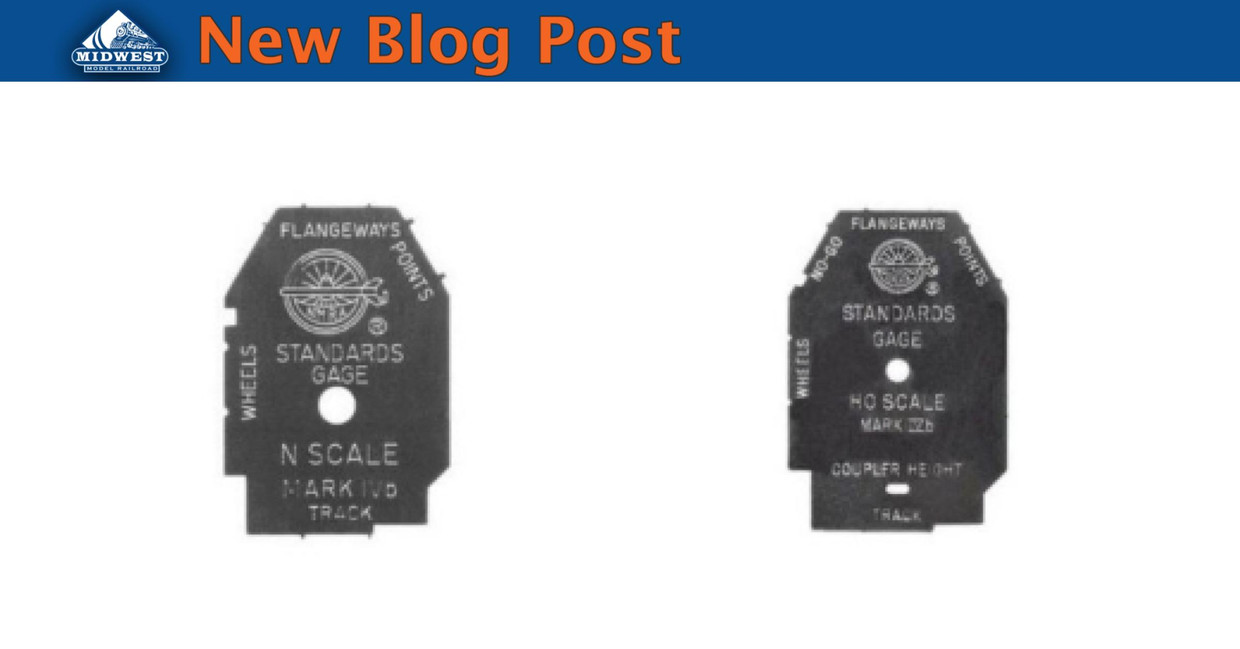
The National Model Railroad Association (NMRA) created the Standards Gauge as a quick reference tool to measure wheel and track dimensions against official standards. Each scale (HO, N, O, etc.) has its own version, cut to the exact tolerances needed for smooth operation.
It might look simple, but this little piece of metal can save you countless derailments and headaches.
How to Use the Gauge
1. Check Track Gauge
-
Set the gauge between the rails.
-
It should sit snugly—too tight or too loose means the track needs adjustment.
? Shop: HO Scale Track at Midwest Model Railroad | N Scale Track
2. Inspect Wheelsets
-
Place wheels into the stepped slots on the gauge.
-
Adjust wheel spacing with a puller or press until both wheels sit correctly.
? Shop: HO Scale Wheelsets | N Scale Wheelsets
3. Measure Flange Depth
-
Use the flange cutout to ensure the wheel flange isn’t too shallow or too deep.
-
Proper flange depth helps prevent wheels from riding up and over rails.
4. Verify Turnout Clearances
-
Test the spacing at frogs and guard rails using the pointed ends of the gauge.
-
Correct clearance keeps wheels from “picking the points” at switches.
? Shop: Turnouts & Switches
5. Confirm Coupler Height (when included)
-
Some NMRA gauges include a coupler height checker.
-
Hold the tool against a coupler to verify correct alignment.
-
Use shims or mounting adjustments to correct mismatches.
? Shop: Couplers & Draft Gear
Best Practices
-
Check as you go: Test track during installation, not after a train derails.
-
Inspect new stock: Even factory-fresh cars may be out of spec.
-
Carry one in your toolbox: It’s inexpensive and saves time on troubleshooting.
Why It Matters
Every derailment damages realism—and sometimes your equipment. A quick test with the NMRA gauge ensures your layout runs smoothly, protecting your investment and keeping operations enjoyable.
At Midwest Model Railroad, we recommend adding a Standards Gauge to your essential toolkit, whether you model in HO, N, or O scale.
? Shop NMRA Gauges: NMRA Standards Gauges
Recent Posts
-
Weighting Freight Cars for Better Performance: NMRA Standards, Practical Methods, and Tracking Tips
Weighting Freight Cars for Better Performance: NMRA Standards, Practical Methods, and Tracking Tips
-
Metal vs Plastic Wheelsets: Pros, Cons, and How to Choose the Right Upgrade for Your Model Railroad
Metal vs Plastic Wheelsets: Pros, Cons, and How to Choose the Right Upgrade for Your Model Railroad
-
Weathering Rolling Stock for Realism: Practical Model Train Weathering Techniques That Look Like the Prototype
Weathering Rolling Stock for Realism: Practical Model Train Weathering Techniques That Look Like the