
Metal vs Plastic Wheelsets: Pros, Cons, and How to Choose the Right Upgrade for Your Model Railroad
Metal vs Plastic Wheelsets: Pros, Cons, and How to Choose the Right Upgrade for Your Model Railroad
If you’ve ever chased intermittent derailments, mysterious stalling, or recurring dirty track problems, you’ve already learned a core truth of the hobby: your trains only run as well as their wheels and track allow. Wheelsets look simple, but they’re one of the biggest “small parts” that influence reliability, realism, and maintenance on a layout. In this guide, you’ll learn the real-world differences in metal vs plastic wheelsets, why prototype railroads care so much about wheel and rail interaction, and how those same principles show up in our models.
We’ll compare performance, sound, cleanliness, electrical pickup behavior, and long-term wear. Then we’ll walk through a practical, step-by-step approach to upgrading wheelsets—including how to check gauge, truck tuning, and what to do when a “simple swap” turns into a derailment magnet. Whether you’re a beginner trying to make your first freight train run smoothly or an experienced operator looking to reduce cleaning time and improve realism, this article will help you make confident decisions about model train wheelsets without guesswork.
Why Wheel Material Matters (Prototype Reasoning You Can Use)
On the prototype, nearly all modern freight and passenger cars ride on steel wheels. Steel on steel offers predictable friction, strong wear characteristics, and consistent rolling behavior. Railroads also maintain wheel profiles and flange thickness carefully because tiny geometry changes can affect tracking through switches and curves.
On our layouts, we’re not running 100-ton cars—but the same concepts apply. Wheelsets do more than “roll”: they set the car’s ride height, influence how well it tracks, affect how much gunk ends up on the rails, and even change how a train sounds. The choice between metal wheels model trains and plastic wheels model trains isn’t about “right vs wrong.” It’s about matching the wheelset to your goals: reliability, sound, track cleanliness, budget, and how you operate.
One helpful way to think about metal plastic wheelsets is this: you’re choosing a package of tradeoffs. If you know which tradeoffs matter most on your railroad, the decision gets easy.
Metal vs Plastic Wheelsets: The Real-World Pros and Cons
Rolling Resistance, Train Length, and Grade Performance
Metal wheelsets are typically heavier than plastic wheelsets. That extra mass can help a car roll more smoothly through minor imperfections in track and can reduce the “skittery” feel some cars get at low speeds. Many modelers also find that metal wheels (especially with well-formed treads) tend to roll with less drag, which can mean longer trains or fewer locomotives needed on a grade—assuming your trucks and bearings are in good shape.
Plastic wheelsets can roll very well too, but results vary more depending on the molding quality, axle point shape, and the truck’s bearing surfaces. Plastic wheels can also pick up burrs or develop tread imperfections that you don’t notice until they start hunting through turnouts.
Practical takeaway: If you’re trying to pull longer trains, reduce stringlining on grades, or improve low-speed switching, metal vs plastic wheelsets becomes a meaningful reliability choice, not just a cosmetic one.
Track Cleanliness and “Black Gunk” (Dirty Track Problems Explained)
The hobby has a long-running debate: do plastic wheels make track dirtier, or do metal wheels keep it cleaner? Here’s the practical explanation.
- Plastic wheels can shed tiny amounts of material and can also attract/hold grime on their tread surface. Over time, that contamination transfers to the railhead and contributes to dirty track problems.
- Metal wheels don’t shed plastic, and many modelers report reduced track cleaning frequency after switching. However, metal wheels can still pick up oils, scenery dust, and oxidation products—so they’re not a “never clean again” solution.
Another factor is where the dirt starts. Layout rooms with carpet, woodworking dust, or scenery grinding/sanding will create airborne particles that settle everywhere—rails and wheels included. Wheel material influences how that dirt behaves, but your environment and maintenance habits still matter.
Common misconception: Metal wheels “clean the track.” In reality, wheels mainly redistribute dirt. If you reduce how much dirt is generated and how much is carried by wheels, you’ll notice an improvement.
Sound and Realism
If you enjoy operations and “layout atmosphere,” sound is a big deal. Metal wheels model trains often produce a crisper clickety-clack over rail joints, turnout frogs, and minor imperfections. Plastic wheels tend to sound quieter and slightly duller.
This is especially noticeable on:
- Hidden staging (you can hear trains moving even when you can’t see them)
- Elevated track or plywood subroadbed (acts like a soundboard)
- Long freights at medium speed (more wheel noise adds presence)
Practical takeaway: If you want more “railroad feel” without changing anything else, wheel material is one of the simplest ways to change layout sound.
Electrical Considerations: Detection, Lighting, and Shorts
Wheel material matters anytime electricity is involved—intentionally or accidentally.
- Metal wheels can conduct electricity. That can help with certain types of occupancy detection or track circuits when paired with resistive methods (layout-dependent). But they can also create problems if a wheel bridges a gap or touches something it shouldn’t—especially on tight clearances near guard rails, turnout points, or metal details close to the rail.
- Plastic wheels are insulating, which reduces accidental shorts. They won’t help with electrical detection methods that rely on conductivity, but they can be simpler on layouts where electrical isolation is critical.
Modeler’s rule of thumb: If you’ve had unexplained shorts around turnouts or crossings, check wheel gauge and back-to-back spacing first—then consider whether conductive wheelsets are exposing a wiring or gap issue.
Wear, Wheel Profile, and Long-Term Consistency
Good wheel profile is what keeps cars tracking predictably through turnouts and curves. Over time:
- Plastic wheels can develop nicks, flat spots, or tread wear more readily, depending on how they were molded and the plastic used. Once a tread is damaged, it can start to “climb” rails or bump through frogs.
- Metal wheels generally hold their profile longer. They may accumulate dirt or oxidation, but the tread itself tends to remain consistent, especially under frequent running.
In the long view, this is one of the strongest arguments in the metal vs plastic wheelsets discussion: consistent wheel geometry equals consistent tracking. That means fewer mystery derailments that come and go.
How to Decide: A Practical Framework for Metal Plastic Wheelsets
Instead of treating metal plastic wheelsets as a one-time “convert everything” project, decide based on what’s happening on your layout right now. For example, if you’re standardizing a fleet of HO freight cars around common 33" wheel diameter, a consistent, repeatable pack can make the project smoother—consider using the Tangent Scale Models 118 - 33 inch Normal Tread Blackened All-Metal Precision Wheelsets – 12 pack as a straightforward “swap and test” starting point for frequently run cars.
Choose Metal Wheelsets If You Want…
- Less frequent track cleaning and fewer dirty track problems
- More consistent rolling and tracking through switches
- More realistic sound and presence
- Longer trains or smoother grade performance
- Durable, long-lasting wheel profiles
Choose Plastic Wheelsets If You Want…
- Lower upfront cost when outfitting large fleets
- Reduced risk of conductive shorts in tricky electrical areas
- Quieter operation (helpful in apartments or late-night sessions)
- A simple “keep it original” approach for certain older equipment
Balanced approach: Many operators put metal wheels on frequently used cars (mainline freights, passenger cars, unit trains) and leave seldom-run cars as-is until issues appear. That’s often the most cost-effective way to benefit from upgrading wheelsets without turning it into an overwhelming project.
Step-by-Step: Upgrading Wheelsets Without Creating New Problems
Swapping model train wheelsets is usually straightforward, but the details matter. Follow this process to avoid the most common pitfalls.
1) Inspect the Trucks Before You Blame the Wheels
A poor-rolling car often has truck problems, not wheel problems.
- Check that the truck swivels freely and isn’t overtightened.
- Look for flash, burrs, or paint on the bearing cones.
- Make sure the sideframes aren’t warped or pinched.
Tip: A car should roll smoothly with a gentle push on straight, level track. If it lurches or stops abruptly, fix the truck first.
2) Confirm Axle Length Compatibility
Not all wheelsets share the same axle length. If the axle is too long, it can bind; too short, and it can rock or drop out. Before you commit to upgrading wheelsets across a fleet, test-fit one car from each manufacturer or era of rolling stock you own.
Common mistake: Forcing a slightly-too-long axle into a truck. The car may roll poorly and derail in curves because the wheelset can’t center itself.
3) Gauge Every Wheelset (Yes, Every One)
Wheel gauge (the spacing between wheel flanges) is the silent cause of many derailments. Even brand-new wheelsets can be slightly off. Use a standards gauge appropriate to your scale and check:
- Back-to-back flange spacing
- Flange depth compatibility with your turnouts
- Clearance through frogs and guard rails
Practical payoff: Correctly gauged wheels will cure more “mystery turnout derailments” than almost any other single fix. If you’re mixing older and newer track/turnouts, note that tread width can be part of the tuning process: semi-scale treads can look fantastic but may be less forgiving on marginal trackwork, so a pack like the InterMountain 40052 - 33" Semi-Scale Wheels (.088" Tread Width) 12 Axles Per Pack - HO Scale rewards careful gauging and solid turnout geometry.
4) Test on Your Most Demanding Track
Don’t test upgrades on the easiest straightaway. Test where problems usually show up:
- Turnouts (especially S-curves through crossovers)
- Tight curves (industrial spurs, yard ladders)
- Grades and vertical transitions (bottom/top of a hill)
Run the car:
- Forward and backward
- At switching speed and moderate speed
- In the middle of a train (not just alone)
Why this matters: A single car can behave perfectly solo but cause stringline derailments or uncoupling when it’s part of a long consist.
5) Recheck Coupler Height After Changes
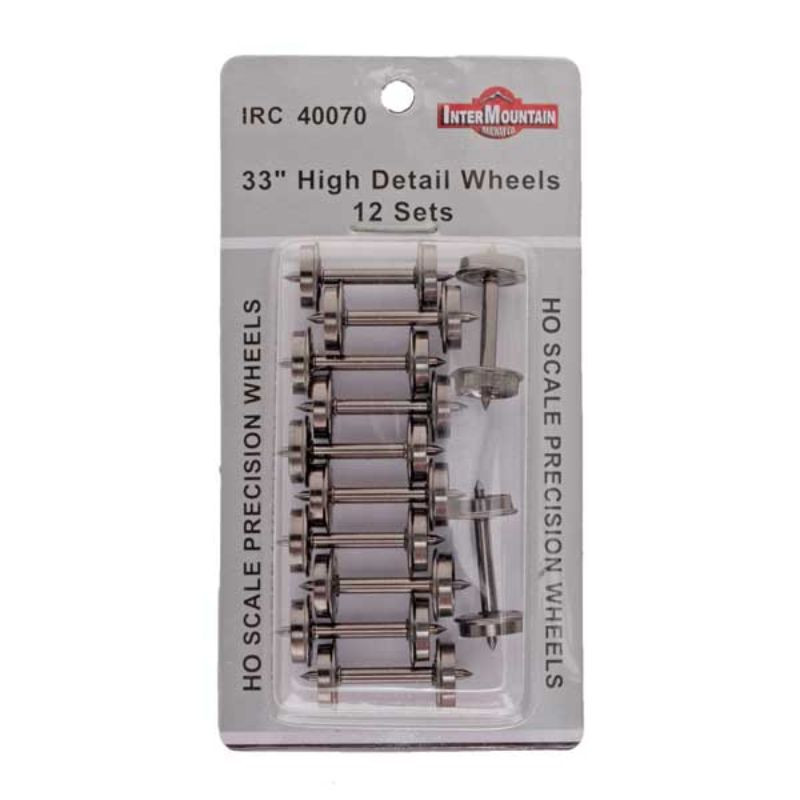
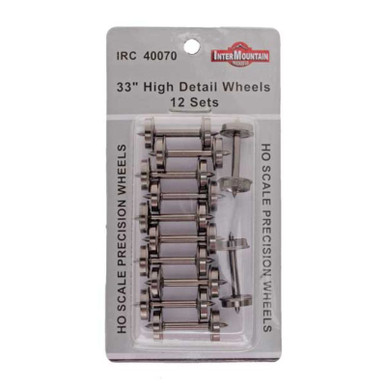
Wheel swaps can subtly change ride height if the wheel diameter differs from what the car had before. That can affect coupler height and trip pin clearance. After installing new wheels, spot-check coupler height and make sure trip pins won’t snag frogs or crossings. If you’re standardizing on a “normal” HO tread width for broad compatibility across mixed trackage, the InterMountain 40070 - 33" Wheels (.110" Tread Width) 12 Axles Per Pack - HO Scale is an example of a wheelset style many operators choose specifically because it tends to be tolerant of everyday layout realities while still delivering the benefits of a metal wheel upgrade.
Common Problems (and Fixes) When Switching Wheel Materials
Problem: The Car Rolls Worse After the Swap
Likely causes: wrong axle length, binding in the truck bearings, or an overtightened truck screw.
Fix: Confirm axle length, clean out the bearing cones, and adjust the truck so it swivels freely while remaining stable.
Problem: Random Derailments at Turnouts
Likely causes: wheel gauge off, turnout guard rail spacing, or a wheel profile that doesn’t match older turnout geometry.
Fix: Gauge the wheels, then test multiple cars through the same turnout. If only one car derails, it’s the car. If many derail, examine the turnout geometry and trackwork.
Problem: New Shorts After Installing Metal Wheels
Likely causes: tight clearances at gaps, metal frog wiring issues, or wheel back-to-back spacing bridging insulated joints.
Fix: Inspect gaps and feeders, confirm wheel gauge, and look for places where a wheel tread can touch both rails in tight areas (especially on curves leading into turnouts).
A Practical Fleet Strategy: Where Metal Wheels Make the Biggest Difference
If you’re deciding how to prioritize upgrading wheelsets, focus on the cars that affect operations most:
- Passenger cars: Long wheelbases and close-coupled diaphragms make smooth rolling and consistent tracking important.
- Unit trains: Many identical cars means small improvements multiply across the consist.
- Yard switching fleets: Cars that are handled constantly should be the most reliable.
- Problem children: Any car that derails “only sometimes” is a prime candidate for wheel gauge checks and wheelset evaluation.
This is where the metal vs plastic wheelsets decision becomes practical: solve the problems that interrupt fun first. Then expand upgrades as time and budget allow.
Final Thoughts: Make the Choice That Supports Your Style of Railroading
The best answer to metal vs plastic wheelsets depends on how you run. If you love long operating sessions, realistic sound, and reduced maintenance, metal wheels model trains often deliver immediate, noticeable benefits—especially when you’re tackling dirty track problems and chasing bulletproof turnout performance. If you’re building up a fleet affordably, operating in a complex electrical environment, or you simply prefer a quieter layout, plastic wheels model trains can still serve you well when they’re in gauge and the trucks are tuned.
Whichever route you take, treat wheels as part of a system: wheels, trucks, couplers, and trackwork all interact. When you approach metal plastic wheelsets with that system mindset, you’ll spend less time troubleshooting and more time enjoying smooth, confident operations.
Estimated word count: ~1,250 words.
Recent Posts
-
Weighting Freight Cars for Better Performance: NMRA Standards, Practical Methods, and Tracking Tips
Weighting Freight Cars for Better Performance: NMRA Standards, Practical Methods, and Tracking Tips
-
Metal vs Plastic Wheelsets: Pros, Cons, and How to Choose the Right Upgrade for Your Model Railroad
Metal vs Plastic Wheelsets: Pros, Cons, and How to Choose the Right Upgrade for Your Model Railroad
-
Weathering Rolling Stock for Realism: Practical Model Train Weathering Techniques That Look Like the Prototype
Weathering Rolling Stock for Realism: Practical Model Train Weathering Techniques That Look Like the