
Prototype Spotlight: Union Pacific Big Boy — The 4‑8‑8‑4 Legend
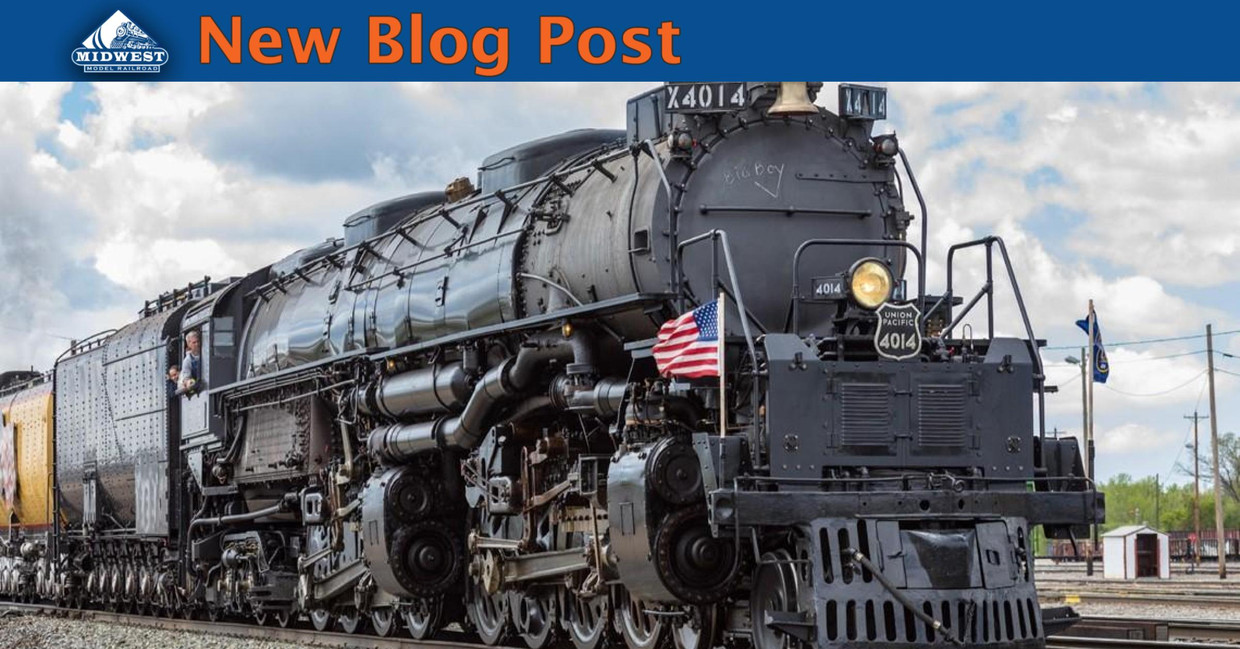
Prototype Spotlight: Union Pacific Big Boy — The 4‑8‑8‑4 Legend
Union Pacific’s Big Boy is the steam era’s headline act—designed to move tonnage over the Wasatch grades without helpers. Built in the early 1940s, the 4‑8‑8‑4 arrangement put two sets of eight drivers under one enormous boiler. Despite the size, crews praised their steady ride and ability to hold speed where the timetable demanded. Today, restored no. 4014 keeps the legend alive on excursion duty and in countless model rooms.
For modelers, the Big Boy represents the ultimate “performance test.” If your benchwork, trackwork, and wiring are square, it glides. If they’re not, this locomotive will find the weak link. That’s why it’s such a satisfying milestone project.
Key specs & what they mean for modelers
- Articulation: The front engine pivots. Your curves need generous radius and good easements so the long wheelbase doesn’t crowd platforms or scenery.
- Length & overhang: Check track centers on curves and turnout angles to avoid side‑swipes with adjacent tracks.
- Weight & pickup: Keep rails clean and add feeders every 3–6 feet. Long engines are unforgiving of dead spots.
Choosing a model (HO & N)
Look for modern drives with strong pickup and factory sound if possible—steam comes alive with synchronized chuffs and momentum. Start your search here:
- HO Scale Steam Locomotives — sound‑equipped options, keep‑alive capacitors, and road‑specific details.
- N Scale Locomotives — surprisingly capable articulateds in compact spaces.
- DCC Decoders — for fine throttle control, momentum, and lighting effects.
Tip: speed‑match helpers or consists with decoder CVs—heavy freights look best when all units start and stop together.
Building a believable consist
On the prototype, Big Boys hauled mixed freights: reefers, hoppers, boxcars, and flats—strings of 40–50′ cars behind that long tender. In HO, prioritize free‑rolling trucks and metal wheels so the train “feels heavy” without overtaxing the motor. Mix weathered cars for variety and keep cabooses era‑correct.
- HO Freight Cars — build out a period‑correct consist.
- HO Steam — check current runs and pre‑orders.
- N Locomotives — modern drives for smooth slow speed.
Track, curves & operation
Curves: In HO, 26–30″ minimum looks right; in N, aim for 15″+. Add easements and keep track centers generous on curves.
Turnouts: Use #6 or larger on the main. Check guard rails and flange ways for clearance—long wheelbases magnify issues.
Grades & power: Keep grades modest and ensure feeders are frequent, especially near turnouts. Clean rail and consistent power turn “big” into “buttery.”
Ready to shop?
Browse HO Big Steam Shop DCC Decoders
FAQ
- Will a Big Boy handle 22″ curves in HO?
- Some models will make it, but it won’t look graceful. If you can, go larger for reliability and appearance.
- What cars pair well visually?
- Mixed 40–50′ boxcars, hoppers, reefers, and flats with light weathering. Keep the caboose era‑appropriate.
- Do I need sound?
- Not required, but steam sound adds immersion. Modern decoders offer excellent chuffs, whistles, and momentum.
Recent Posts
-
Weighting Freight Cars for Better Performance: NMRA Standards, Practical Methods, and Tracking Tips
Weighting Freight Cars for Better Performance: NMRA Standards, Practical Methods, and Tracking Tips
-
Metal vs Plastic Wheelsets: Pros, Cons, and How to Choose the Right Upgrade for Your Model Railroad
Metal vs Plastic Wheelsets: Pros, Cons, and How to Choose the Right Upgrade for Your Model Railroad
-
Weathering Rolling Stock for Realism: Practical Model Train Weathering Techniques That Look Like the Prototype
Weathering Rolling Stock for Realism: Practical Model Train Weathering Techniques That Look Like the