
Scenery Basics: From Foam to Foliage — A Quick, Budget-Friendly Guide | Midwest Model Railroad
Modeling Tutorial
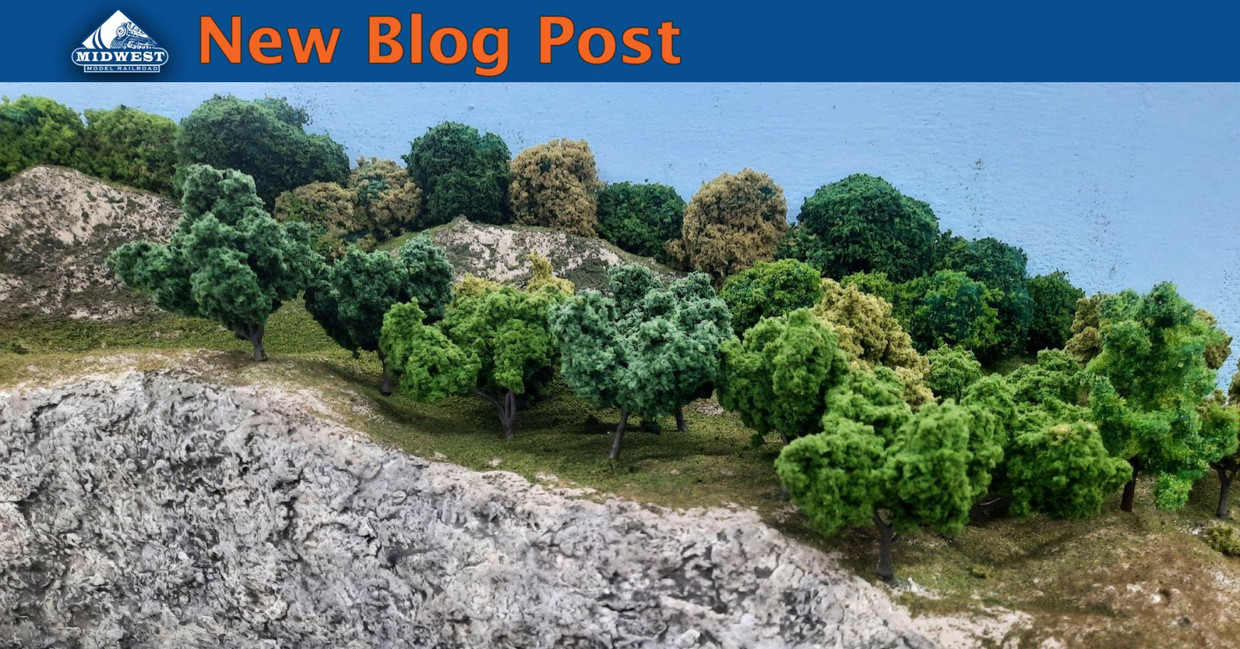
Scenery Basics: From Foam to Foliage

Scenery is where a layout comes alive. With a smart sequence—lightweight foam for bulk, a plaster‑cloth shell for strength, and layered textures for realism—you can turn benchwork into a believable landscape over a weekend. This guide blends quick‑build methods, budget‑friendly choices, and portable layout techniques to help you get great results fast.
1) Shape the land with foam (quick & light)
Stack and carve foam sheets to create hills, cuts, and embankments. Foam is easy to knife‑cut, sands cleanly, and won’t weigh down shelves or modules. Start with 1/4″ or 1/2″ layers, then laminate to build height.
Grab a starter sheet like the Woodland Scenics ST1422 Foam Sheet. Dry‑fit pieces, trace contours, and glue with foam‑safe adhesive. After curing, round edges with a surform or sanding block—the irregularities will read as natural slopes after texture.

2) Lock the shape with a plaster‑cloth shell
Foam provides bulk; plaster cloth gives you a unified, durable surface. Dip strips in water, drape over the foam, and smooth with your fingertips. Two thin layers are stronger—and lighter—than one thick one.
For small projects and modules, the Woodland Scenics C1191 Plaster Cloth (4" × 15') is an easy, affordable choice. Keep a damp brush on hand to feather edges and fill the weave so paint and turf lay flat.
3) Base‑paint for depth
Before textures, brush on earth‑tone latex paint. Go darker in the valleys and lighter on ridges to “pre‑shade” the land. If a bit of turf sheds later, you won’t see white plaster peeking through.
4) Ground cover → static grass (fast realism)
Work big‑to‑small: coarse turf for soil, medium for weeds, fine for color variation. Then apply static grass in two or three lengths for believable meadows. A thin layer of scenic cement is all you need; too much glue can make fibers clump.
Browse our curated Static Grass selection to mix short “lawn” fibers with longer summer tones. Layering 2–4 mm with 6–7 mm fibers creates that freshly‑mowed‑meets‑wild‑edge look.

Pro Tip: Blend, don’t blob
Feather fine turf into static grass while the glue is still tacky, then dust a little earth powder across rock faces. Overlapping textures hides seams and adds instant depth—especially along track shoulders and tree lines.
5) Lightweight tricks for portable layouts
- Hollow hills: Stack foam “ribs,” bridge with cardstock, then skin with plaster cloth—rigid and feather‑light.
- Removable scenics: Build small scenes on foamcore bases so you can lift them out for repairs or transport.
- Minimal liquids: Use spray‑bottle alcohol and dropper‑applied scenic cement to keep moisture low on thin shelves.
6) Budget‑friendly swaps that still look pro
- Sample‑size paints: Earth‑tone craft paints stretch far for base coats.
- DIY soil: Sifted dirt (baked dry) or used tea leaves add believable browns under turf—seal well.
- Targeted purchases: Invest in the items that matter most for realism: plaster cloth, a good foam base like ST1422, and a couple of static grass blends.
7) A quick history of ground foam
Ground foam—those colorful bags of “turf” we all know—rose to popularity in the 1960s–70s, replacing dyed sawdust and sponge in many kits. Today’s materials are finer, colorfast, and mix beautifully with static fibers, letting you create realistic transitions from soil to scrub to tall grass with just a few products.
FAQ
What’s the fastest way to cover a larger area?
Base‑paint your landform, brush on scenic cement, sprinkle coarse → medium → fine turf, then apply a single color of short static grass. Come back later with a second pass of longer fibers for variety.
How do I keep static grass standing up?
Use thin glue, apply in a thin layer, and make sure the applicator has a good ground connection. Tap the surface—it helps fibers settle upright as the charge dissipates.
Can I ballast before or after scenery?
Either works, but many modelers do basic ground cover first, then ballast, then blend with more turf so the shoulder looks natural.
What’s the best order for a small module?
Foam landform → plaster cloth shell → base paint → turf layers → static grass → bushes/trees → final details.
Featured: Foam Sheet ST1422 · Plaster Cloth C1191 · Static Grass
Recent Posts
-
Weighting Freight Cars for Better Performance: NMRA Standards, Practical Methods, and Tracking Tips
Weighting Freight Cars for Better Performance: NMRA Standards, Practical Methods, and Tracking Tips
-
Metal vs Plastic Wheelsets: Pros, Cons, and How to Choose the Right Upgrade for Your Model Railroad
Metal vs Plastic Wheelsets: Pros, Cons, and How to Choose the Right Upgrade for Your Model Railroad
-
Weathering Rolling Stock for Realism: Practical Model Train Weathering Techniques That Look Like the Prototype
Weathering Rolling Stock for Realism: Practical Model Train Weathering Techniques That Look Like the