
Scenery How‑To: Realistic Ballast Application (No Mess, No Clogs)
Scenery How‑To: Realistic Ballast Application (No Mess, No Clogs)
Materials
- Ballast (colors & grades) — blend for your region
- Adhesives — matte medium or PVA
- Tools — soft brush, pipettes, small spoon, vacuum with stocking

Practice on a test board first—your hands learn the flow, and you’ll waste fewer materials when you move to the mainline.
Prep & color matching
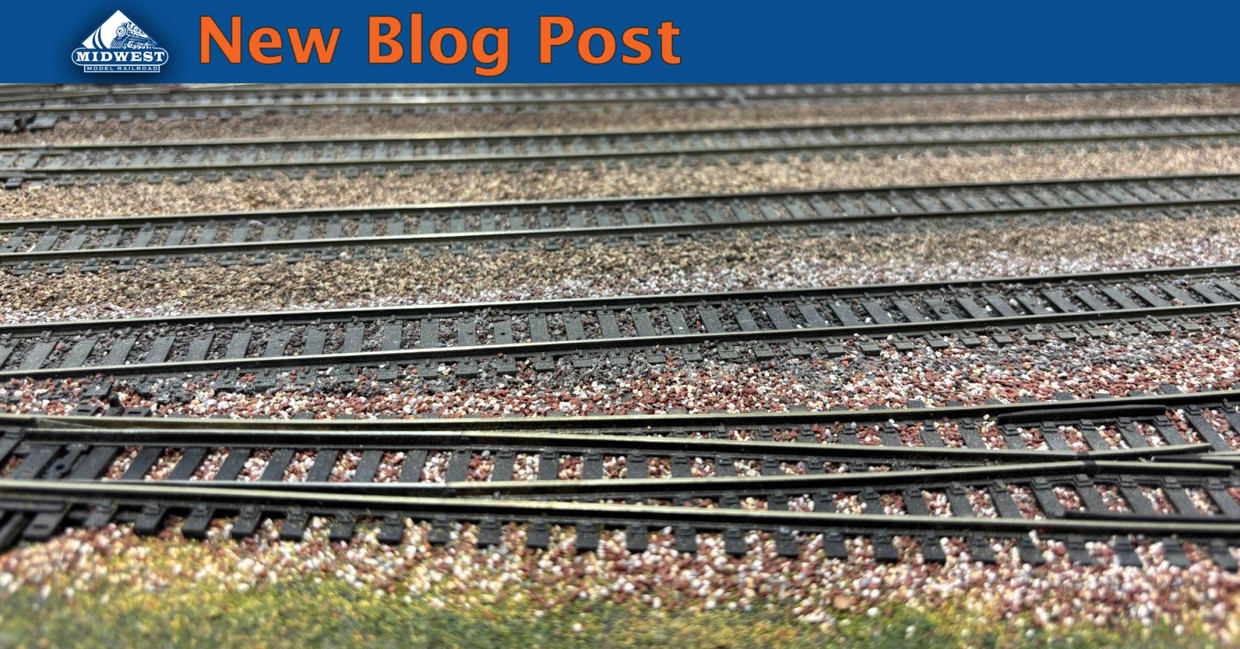
Paint cork or foam a neutral gray/brown to hide gaps and keep “bald” spots from showing. Compare local prototype photos to pick ballast color—mainlines often skew gray, yards warmer brown. Many modelers mix two colors (70/30) for natural variation. Sift fines for N scale so stones don’t ride on tie plates.
Weathering starts under the rails: paint ties and rails first. A rusty brown on the web, darker near joints and frog points, creates depth before a single stone is poured.
Spread & shape
Pour a small line down the center and brush toward the shoulders. Keep grains off tie tops and inside guard rails. In yards, shoulders are low and irregular; on mainline, keep a crisp, even profile. Use a dry, soft brush to taper slopes to surrounding ground foam so the track looks set into the scene.
Pre‑wetting
Surface tension is the enemy. Mist 70% isopropyl alcohol or water with a drop of dish soap until ballast looks damp, not flooded. Pre‑wetting helps glue wick deep without moving stones. If the spray beads up, you need a touch more surfactant.
Glue ratios
For most scenes, a 1:3 mix of matte medium to water flows and dries with minimal sheen. In very fine ballast or hot climates, try 1:4 and build up with two light applications rather than one heavy one. Drip with a pipette along tie ends and shoulders—capillary action does the work. Resist the urge to brush; you’ll just disturb the profile.
Cleanup & curing
Wick puddles with a paper towel edge. While still damp, flick stray grains out of guard rails and flange ways with a toothpick. After curing overnight, vacuum gently through a nylon stocking to catch loose stones for reuse. Touch up with weathering powders to tie rails, ties, and ballast into one tone.

Ready to stock up?
Shop Ballast Get Adhesives Browse Tools
FAQ
- Can I ballast Kato Unitrack?
- Yes—treat ballast as a light cosmetic layer. Avoid flooding joiners and keep glue off moving points.
- My glue dried shiny—help?
- Go lighter on the mix next time and dust with matte powders. A very light flat coat can knock down sheen.
- What order should I do scenery in?
- Ballast after basic ground cover so stones sit “into” the scene, not on top of bare foam.
Recent Posts
-
Weighting Freight Cars for Better Performance: NMRA Standards, Practical Methods, and Tracking Tips
Weighting Freight Cars for Better Performance: NMRA Standards, Practical Methods, and Tracking Tips
-
Metal vs Plastic Wheelsets: Pros, Cons, and How to Choose the Right Upgrade for Your Model Railroad
Metal vs Plastic Wheelsets: Pros, Cons, and How to Choose the Right Upgrade for Your Model Railroad
-
Weathering Rolling Stock for Realism: Practical Model Train Weathering Techniques That Look Like the Prototype
Weathering Rolling Stock for Realism: Practical Model Train Weathering Techniques That Look Like the